

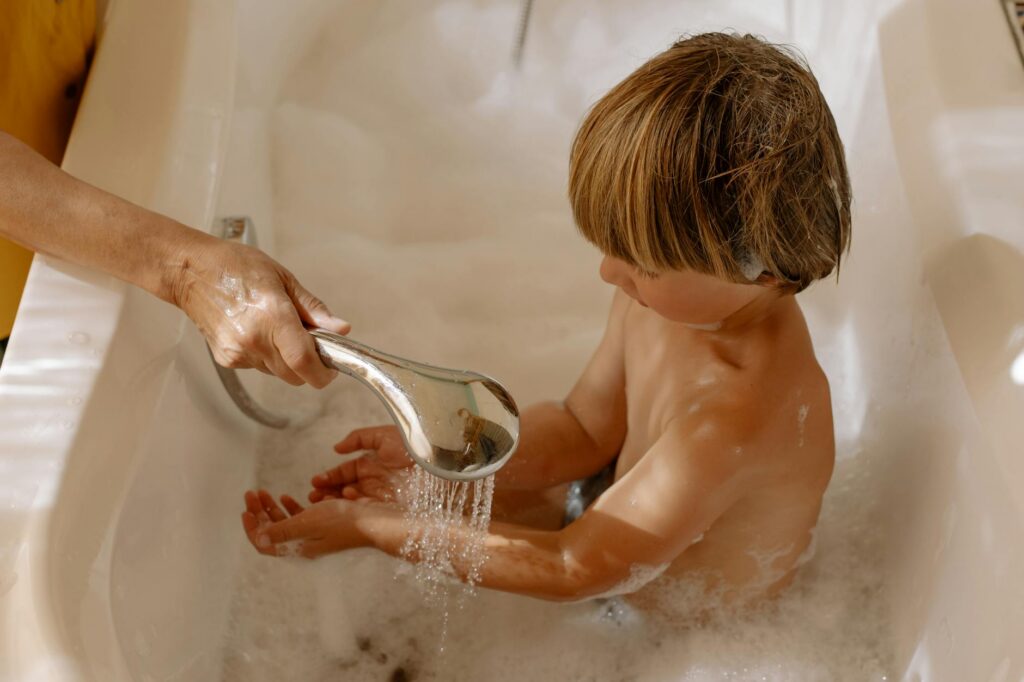
When it comes to natural soap for babies and toddlers with sensitive skin, parents are right to be more careful than they are about their own products. Infant and toddler skin is structurally different from adult skin — it is thinner, more permeable, and less capable of neutralizing chemical irritants. Ingredients that an adult’s skin manages without visible reaction can cause significant irritation, rashes, and disruption to a baby’s skin barrier.
This guide covers what makes baby skin different, which ingredients to avoid entirely, and what qualifies as genuinely safe natural soap for babies and toddlers.
Infant skin is not just thinner — it has a less developed skin barrier overall. The stratum corneum (the outermost protective layer) in newborns and infants has fewer cell layers, lower lipid content, and a less mature acid mantle. This means:
Sodium Lauryl Sulfate (SLS) and Sodium Laureth Sulfate (SLES) These surfactants are far too harsh for infant skin. They strip what little lipid barrier a baby has and cause measurable increases in skin permeability — which means more of everything else in the soap (and in the environment) gets through the skin. Many “gentle” commercial baby washes still contain these.
Synthetic Fragrance No baby product should contain synthetic fragrance — period. The compounds included under the “fragrance” or “parfum” umbrella are undisclosed, many are allergens, and baby skin’s heightened permeability means greater systemic exposure. The “fresh baby smell” that many commercial baby washes produce is synthetic fragrance — not a natural scent.
Parabens Methylparaben and propylparaben are common preservatives found even in baby products. They have been detected in blood plasma after topical application, which is a particular concern when applied to the large, permeable surface area of infant skin. Look for paraben-free formulations.
Phenoxyethanol This preservative is so commonly used that it has even appeared in some products marketed as natural. The FDA has warned about its use in nipple creams due to potential risks when ingested by infants, and the European Food Safety Authority has expressed concern about exposure in children under three.
Essential Oils While natural, many essential oils are not safe for infant skin. Eucalyptus, peppermint, and tea tree are specifically contraindicated in children under two due to their ability to cause respiratory depression. Citrus oils are photosensitizers. Even lavender — one of the most commonly recommended “calming” oils for babies — has shown hormonal activity in some studies and is best avoided in very young children.
A truly safe natural soap for babies and toddlers with sensitive skin contains:
Real whole milk as a base (goat milk or oat milk) Whole milk-based soaps are among the gentlest formulations available. Goat milk’s pH (4.5 to 6.5) is compatible with infant skin’s natural range. Its short-chain fatty acids absorb rather than sit on the surface, and the lactic acid is present in mild enough concentrations to support gentle cell turnover without irritation. It contains no synthetic compounds.
A short, verifiable ingredient list The fewer ingredients, the safer for sensitive baby skin. Ideal is: goat milk, one or two plant-based oils, and nothing else. Every additional ingredient is a variable that could cause a reaction.
No fragrance of any kind — including essential oils Genuinely unscented. Not “lightly scented with lavender.” No fragrance.
No sulfates, parabens, or synthetic preservatives The formulation should be preserved naturally (low water content in bar soap is inherently self-preserving) or with plant-derived alternatives.
Most pediatric dermatologists recommend using only warm water for the first two to four weeks of life. After that, a minimal, whole-ingredient soap can be introduced — but daily soap use for babies is generally considered unnecessary. Two to three times per week on skin folds, diaper area, and hair is typically sufficient. Over-washing baby skin disrupts the developing acid mantle and microbiome.

Our fragrance-free goat milk bars are made with the shortest possible ingredient list — goat milk and plant-based oils. We include no essential oils, no synthetic fragrance, no sulfates, and no parabens.
We hear from parents regularly who use our bars on children with sensitive skin, eczema, and cradle cap with positive results. We do not make pediatric medical claims — but when parents ask us what makes our bar suitable for children, the answer is simple: we removed everything that should not be on sensitive skin in the first place.
Natural soap for babies and toddlers with sensitive skin needs to clear a higher bar than most “baby” products on the market. Short ingredient list, no fragrance of any kind, no sulfates, no parabens, and a pH-compatible milk or plant-oil base. Goat milk soap that meets all of these criteria is one of the safest and gentlest options available for infant and toddler skin.
Read every label. Do not trust the marketing. Your baby’s skin is worth the extra thirty seconds.

